
Safety model
Safety
AI proposes. The clinician disposes. Deterministic checks run when models do not.
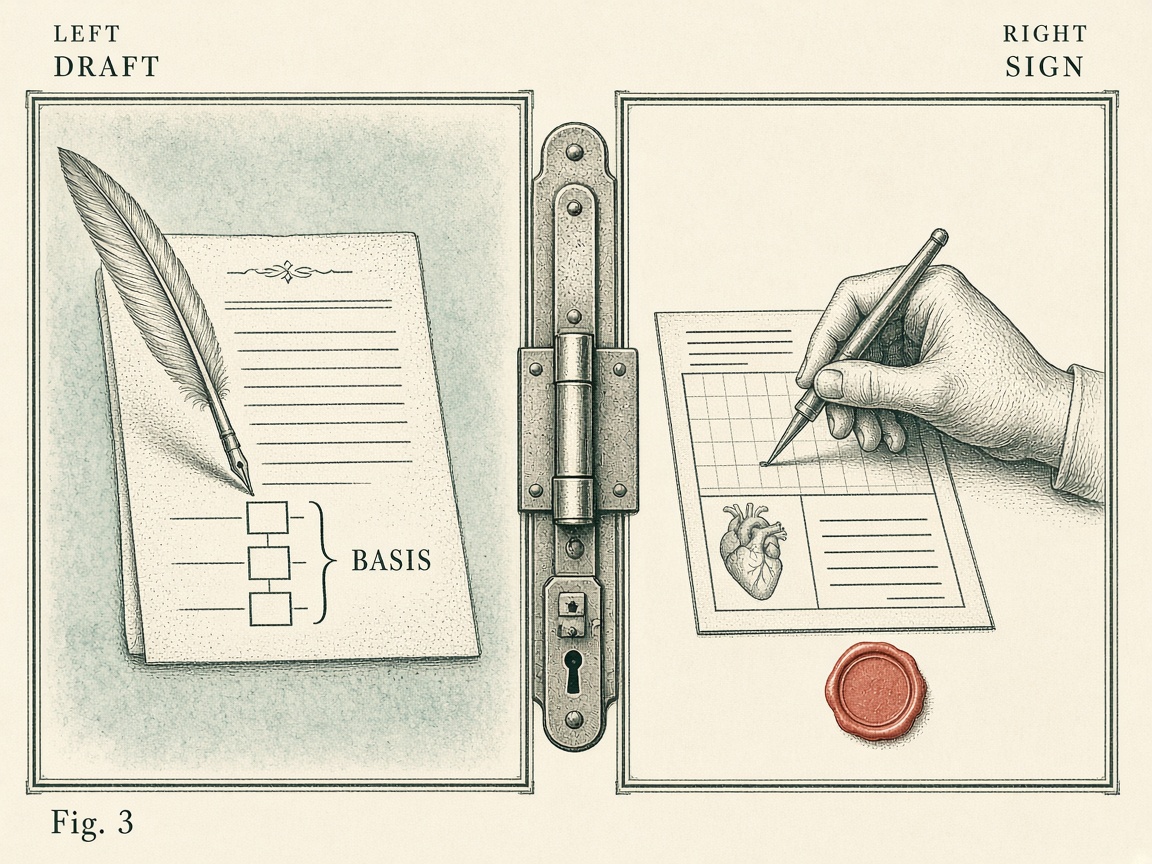
Beys treats clinical AI as a drafter. A licensed clinician converts a draft into the chart by signing.
The short formula is this: AI proposes. The clinician disposes.
Draft and sign
Every clinical AI output is a draft. The draft carries a basis: inputs, evidence, and versions.
Unsigned output does not become the chart. Corrections after sign are amendments, not silent edits. The chart is append-only.
Deterministic floor
Drug–drug interaction, allergy, and dose checks are deterministic. They run when AI is down.
The red floor is not demotable. Allergy conflict, contraindicated interaction, and critical values stay loud.
AI suggestions sit above that floor. They do not replace it.
Council
Several models assess independently. An aggregator reconciles. Disagreement is signal.
The council is not a vote that hides dissent. You can see that the panelists did not agree.
Companion bound
The patient companion educates, collects, reminds, and escalates.
It does not diagnose. It does not change treatment. It over-triages on purpose.
Prevention honesty
Care gaps are process measures. Treat-to-target is the next rung. Longer life is an aim.
Beys does not claim that it extends life. Beys does not claim that it reduces mortality.
What this page does not claim
Beys is not a certified medical device. Engineering evaluation on synthetic journeys is not clinical validation. "Zero missed red flags" is not a clinical fact that this site will print.
Read the public claims page before you reuse any sentence.